Porcelain Veneers in San Diego - Cost, Process, and Results

What Porcelain Veneers Actually Do
Porcelain veneers are thin ceramic shells, typically 0.5–0.7 mm thick, bonded directly to the front surface of your teeth. They mask chips, stains, gaps, and mild misalignment in a way that looks indistinguishable from natural enamel. Unlike crowns, veneers remove only a minimal amount of tooth structure. The result is a durable, stain-resistant surface that holds its color for a decade or longer with proper care.
Veneers work best when the underlying teeth are healthy and structurally sound. If decay or gum disease is present, a San Diego cosmetic dentist will address those issues before any veneer work begins. Most candidates are people who are happy with their bite but want to change the color, shape, or proportion of their smile.
Porcelain Veneers Cost in San Diego
Porcelain veneers in San Diego typically cost $900–$2,000 per tooth. Where you land in that range depends on the complexity of your case, the number of teeth treated, and the specific cosmetic dental practice you choose. A single tooth corrected after an accident sits at the lower end. A comprehensive smile redesign involving several teeth from a high-demand cosmetic specialist can push toward the top.
Dental insurance rarely covers porcelain veneers because they are classified as cosmetic. Many San Diego dental offices offer financing through third-party providers such as CareCredit or Sunbit, which lets patients spread the cost into monthly payments. Terms vary by provider and credit approval, so ask your dental office for specifics before committing.
Composite resin bonding is a lower-cost alternative, priced at $200–$600 per tooth, though it is less durable and more prone to staining over time. For patients who want a middle ground on budget, some practices also offer composite veneers. Porcelain remains the premium choice for longevity and aesthetics.
The Veneer Process - What to Expect
Consultation and Treatment Planning
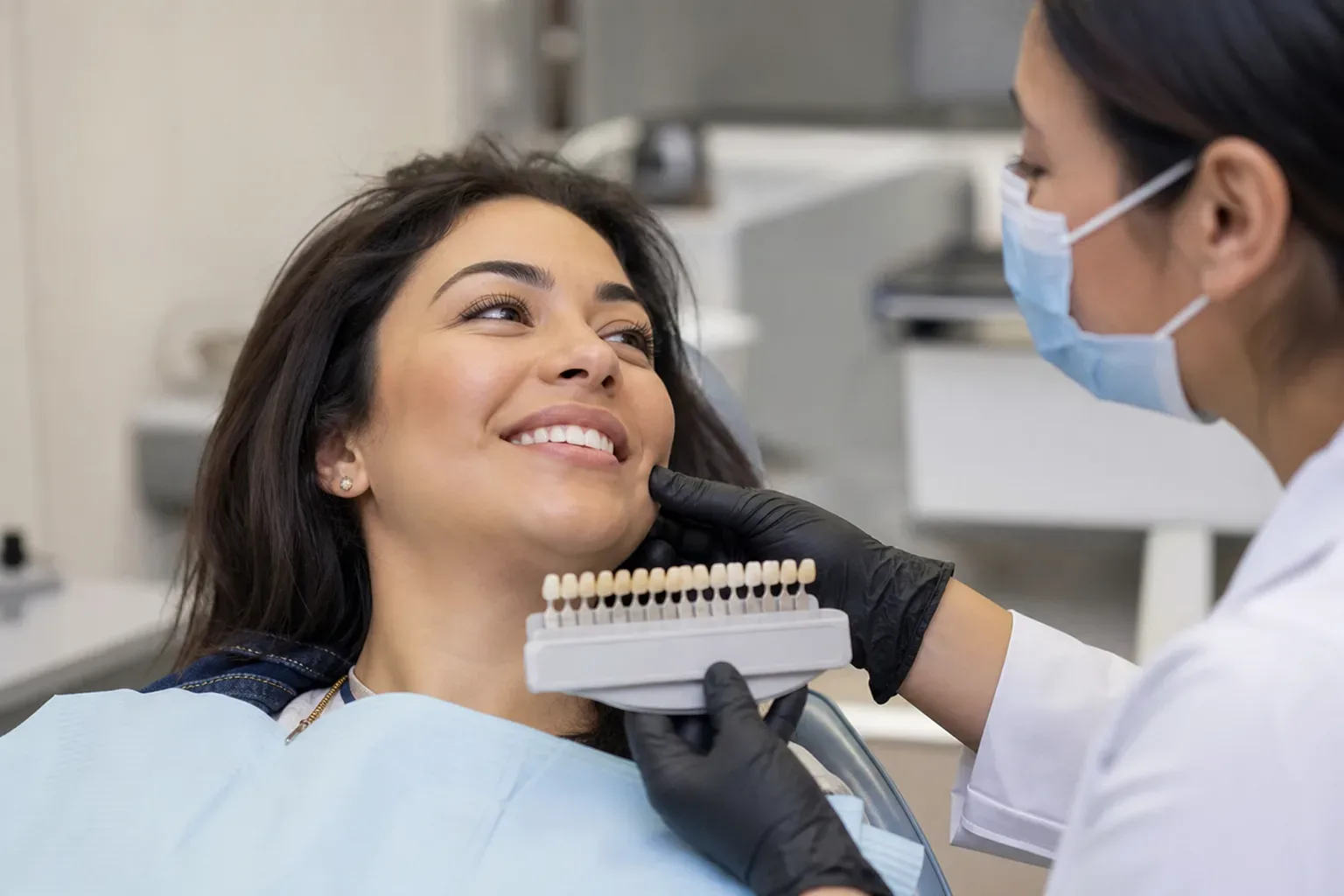
The process starts with a full cosmetic consultation. Your dentist examines your teeth, takes X-rays, and discusses the look you are after, including shape, length, and shade. Many San Diego practices use digital smile design software to show you a preview before any work begins. This step is also when you confirm whether your gum health and bite mechanics make you a good candidate.
Tooth Preparation
At the preparation appointment, the dentist removes a thin layer of enamel from each tooth receiving a veneer. Local anesthetic keeps the process comfortable. Impressions or digital scans go to a dental lab, and temporary veneers protect your teeth while the permanent set is fabricated. Lab turnaround is typically one to two weeks.
Bonding and Final Placement
When the permanent veneers arrive, your dentist checks the fit, color, and shape before bonding. Any minor adjustments happen at this stage. The veneers are etched, primed, and cemented with a light-cured composite resin. After a final bite check and polish, the procedure is complete.
Most patients leave the same day with a noticeably transformed smile.
How Long Do Porcelain Veneers Last?
Well-maintained porcelain veneers typically last 10–15 years, and many patients get longer life from them with consistent care. The main factors are oral hygiene, bite habits, and whether you grind your teeth at night. A custom night guard protects veneers from the force of bruxism and is a worthwhile investment alongside the procedure.
Avoid biting directly into very hard foods with veneered teeth. Use a soft-bristle toothbrush and non-abrasive toothpaste to keep the ceramic polished. Regular cleanings, priced at $100–$250 per visit without insurance in San Diego, let your dentist monitor the condition of the margins and catch any early issues.
Choosing a San Diego Cosmetic Dentist for Veneers
Not every general dentist has the cosmetic training or laboratory partnerships needed to deliver high-quality veneer work. Look for a dentist who shows before-and-after photos of actual patients, not stock images, and who can discuss the specific porcelain materials used. Practices affiliated with the American Academy of Cosmetic Dentistry often have documented cosmetic case experience.
Location matters for convenience across multiple appointments. San Diego neighborhoods like La Jolla, Mission Valley, and Downtown each have established cosmetic dental practices. Reviews on Google and Yelp can surface consistent patterns in patient satisfaction, wait times, and how offices handle follow-up concerns.
Ask about the dental lab the practice uses. Domestic labs often produce ceramic work that matches more precisely because communication between the dentist and ceramist is faster and easier. The lab relationship directly affects how natural your final veneers look.
Are Porcelain Veneers Right for You?
Porcelain veneers suit patients whose teeth are structurally healthy but cosmetically compromised in ways that whitening or bonding cannot fully fix. Deep intrinsic stains from tetracycline or fluorosis, worn or shortened teeth, and permanent gaps are all strong candidates for veneers.
Veneers are not ideal if you have significant bite misalignment, active gum disease, or heavily decayed teeth. In those cases, Invisalign treatment or restorative work may need to come first. A thorough consultation with a San Diego cosmetic dentist will clarify which path makes the most sense for your situation.
If your concerns are limited to mild discoloration, professional whitening achieves up to 6–10 shades of improvement in a single in-office session at $300–$600, making it a far more conservative starting point. Veneers are the right call when you want a permanent change to shape, size, and color together.
What to Do Next
Schedule a cosmetic consultation with a San Diego dentist who specializes in porcelain veneers. Bring photos of smiles you admire and be specific about what bothers you about your current teeth. The more clearly you communicate your goals, the more accurately the dentist can plan treatment and quote a realistic cost.
Most consultations are low-cost or complimentary, and you leave with a clear picture of candidacy, timeline, and total investment. Getting that information costs you nothing but an hour of your time.
Frequently Asked Questions
How Much Do Porcelain Veneers Cost in San Diego?
Porcelain veneers in San Diego cost $900–$2,000 per tooth. The exact price depends on the complexity of your case, how many teeth are treated, and the cosmetic dental practice you choose. Dental insurance typically does not cover veneers since they are considered cosmetic, but many offices offer financing through providers like CareCredit or Sunbit.
How Many Teeth Do You Need Veneers on for a Full Smile?
Most cosmetic dentists design veneer cases around the teeth visible when you smile, which is commonly six to eight upper front teeth. The exact number depends on the width of your smile and your aesthetic goals. Your dentist will recommend a count during the consultation based on what will look natural and proportionate to your face.
How Long Do Porcelain Veneers Last?
Porcelain veneers typically last 10–15 years with proper care. Longevity depends on your oral hygiene habits, whether you grind your teeth, and how you treat them day to day. A custom night guard and routine dental cleanings are the two most effective ways to extend the life of your veneers.
Do Porcelain Veneers Damage Your Natural Teeth?
Getting veneers does require removing a thin layer of enamel, roughly 0.5–0.7 mm, from each tooth being treated. This is irreversible, which is why veneers are considered a permanent commitment. However, the amount of enamel removed is minimal compared to a dental crown, and the bonded veneer protects the prepared surface going forward.
What Is the Difference Between Porcelain Veneers and Composite Bonding?
Porcelain veneers are lab-fabricated ceramic shells that cost $900–$2,000 per tooth and can last 10–15 years or more. Composite bonding uses tooth-colored resin applied directly at the dental chair, costing $200–$600 per tooth, and typically lasts 5–7 years before needing repair or replacement. Porcelain offers superior stain resistance and a more lifelike translucency, while bonding is more affordable and requires less tooth preparation.